Vagus Nerve Stimulation and Sleep: Can VNS Improve Sleep Quality?
Introduction: The Sleep Crisis and the Search for Alternatives
Chronic insomnia affects an estimated 10–15% of the global adult population, with broader sleep complaints reported by up to one-third of adults (Morin et al., 2015). The consequences extend far beyond daytime fatigue — chronic sleep disturbance is associated with increased risk of cardiovascular disease, metabolic disorders, depression, and impaired immune function.
Current first-line treatments for insomnia include cognitive behavioural therapy for insomnia (CBT-I) and pharmacotherapy. While CBT-I is effective, access remains limited by a shortage of trained therapists. Pharmacological options — benzodiazepines, z-drugs, and orexin receptor antagonists — carry concerns about dependency, tolerance, and next-day impairment.
This gap has fuelled interest in non-invasive neuromodulation approaches, particularly transcutaneous auricular vagus nerve stimulation (taVNS), as a potential treatment for sleep disorders. The rationale is grounded in the vagus nerve's central role in regulating the autonomic nervous system — the very system that governs the transition between wakefulness and sleep.
The Vagus Nerve and Sleep Architecture
Autonomic Regulation of Sleep
Sleep is fundamentally an autonomic process. The transition from wakefulness to sleep is characterised by a shift from sympathetic (fight-or-flight) dominance toward parasympathetic (rest-and-digest) dominance. The vagus nerve is the primary conduit of parasympathetic activity, and its tone — often measured indirectly through heart rate variability (HRV) — is closely associated with sleep quality.
Individuals with higher vagal tone, reflected by greater HRV, tend to fall asleep faster, spend more time in restorative deep sleep, and report better subjective sleep quality. Conversely, insomnia is characterised by autonomic hyperarousal — elevated sympathetic activity and reduced vagal tone — that persists into the night (Bonnet & Arand, 2010).
This observation raises an important question: if insomnia is partly a disorder of autonomic dysregulation, could stimulating the vagus nerve help restore the parasympathetic dominance needed for healthy sleep?
Brainstem Nuclei and Sleep–Wake Regulation
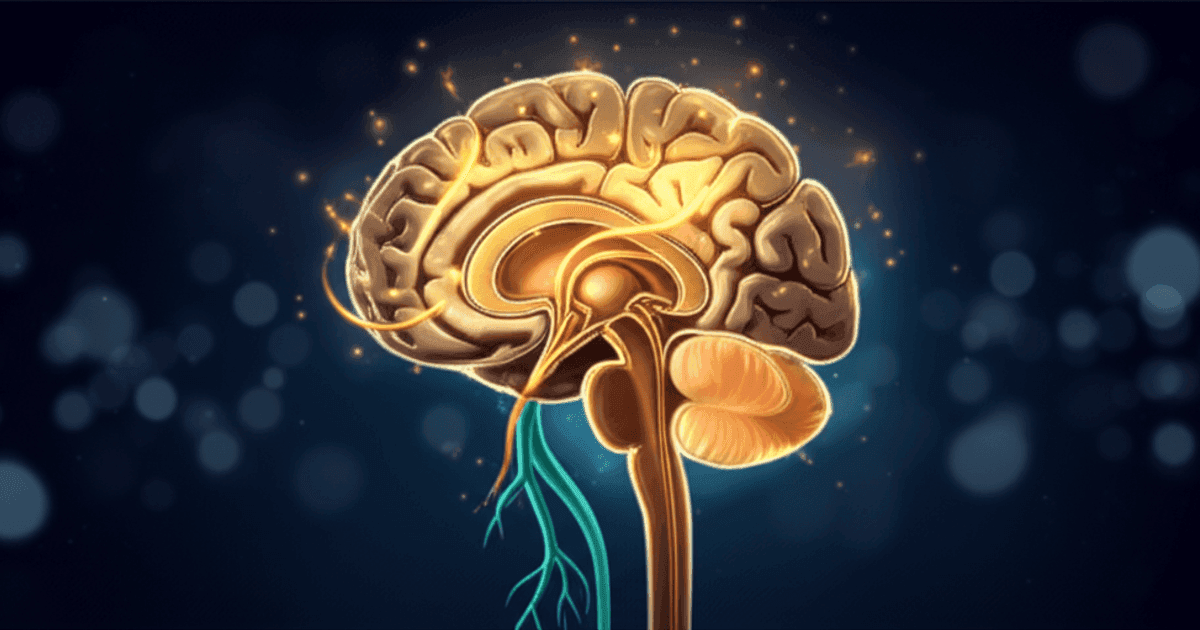
The vagus nerve projects to the nucleus tractus solitarius (NTS), which connects to several brainstem nuclei involved in sleep regulation:
- Locus coeruleus (LC) — The primary noradrenergic nucleus, whose activity must decrease for sleep onset to occur. VNS has been shown to modulate LC firing rates (Dorr & Debonnel, 2006).
- Dorsal raphe nucleus — The principal source of serotonin, a precursor to melatonin and a modulator of sleep stages.
- Parabrachial nucleus — Involved in arousal regulation and the transition between sleep states.
Through these projections, VNS has the potential to influence not only the autonomic prerequisites for sleep but also the central neural circuits that govern sleep architecture.
Clinical Evidence: taVNS for Insomnia
Randomised Controlled Trials
The Jiao et al. (2020) RCT was an early controlled trial examining taVNS for primary insomnia. In this randomised study of 72 patients, four weeks of taVNS at the auricular concha significantly improved Pittsburgh Sleep Quality Index (PSQI) scores compared to sham stimulation at a non-vagal ear site. The study also reported improvements in anxiety and depression symptoms, consistent with the broader neuropsychiatric effects of vagal stimulation.
The JAMA Network Open trial (2024) represented a significant step forward in evidence quality. This randomised clinical trial, conducted in Beijing from October 2021 to December 2022, enrolled 72 participants with severe chronic insomnia disorder (PSQI ≥ 8). Participants received either active taVNS or sham stimulation for 30 minutes twice daily, five days per week, over eight weeks. The results were striking: the active taVNS group achieved a mean PSQI reduction of 8.2 points compared to 3.9 points in the sham group — a clinically meaningful 4.2-point difference with a large effect size (Cohen's d = 1.2). Benefits were sustained over the full 20-week study period, and no serious adverse effects were reported.
Wu et al. (2022) conducted a randomised control trial of 30 patients with primary insomnia, finding that one month of taVNS improved the effective rate of treatment (defined as ≥50% PSQI reduction) compared to sham. The study added to the growing body of evidence that taVNS can produce clinically meaningful improvements in sleep quality.
Systematic Reviews and Meta-Analyses
De Oliveira et al. (2025) published the most recent systematic review and meta-analysis of taVNS for insomnia, pooling data from six studies encompassing 336 patients. The analysis found statistically significant improvements in both PSQI scores (MD = −3.60; 95% CI: −4.98 to −2.22) and Insomnia Severity Index scores (MD = −5.24; 95% CI: −9.02 to −1.46). Improvements were observed across multiple sleep dimensions, including sleep quality, latency, duration, and efficiency. Adverse effects were minimal, reinforcing the safety profile of taVNS.
Community-Dwelling Adults
Importantly, the benefits of taVNS for sleep may extend beyond clinical insomnia populations. Bretherton et al. (2019) demonstrated that two weeks of daily taVNS improved sleep quality in community-dwelling adults aged 55 and above — individuals with non-clinical sleep complaints rather than diagnosed insomnia. A subsequent randomised trial confirmed that a two-week course of taVNS improved global sleep ratings compared to sham in a general population sample, suggesting that the effects are not limited to severe insomnia.
Proposed Mechanisms
Autonomic Rebalancing
The most straightforward mechanism is that taVNS shifts autonomic balance toward parasympathetic dominance — essentially lowering the physiological arousal that prevents sleep onset. Several studies have demonstrated that taVNS increases HRV, particularly the high-frequency component that reflects vagal tone (Clancy et al., 2014; Bretherton et al., 2019). By enhancing parasympathetic activity, taVNS may help create the autonomic conditions necessary for sleep initiation.
Neurotransmitter Modulation
VNS modulates neurotransmitters that are directly involved in sleep–wake regulation. Through its projections to the locus coeruleus and dorsal raphe, VNS influences noradrenaline and serotonin release. The locus coeruleus is of particular interest because its activity must decrease for sleep onset to occur — and VNS has been shown to modulate LC firing patterns in ways that could facilitate this transition.
Serotonin, in turn, is a precursor to melatonin via the pineal gland. By modulating serotonergic transmission, VNS may indirectly influence the circadian signalling pathways that regulate sleep timing.
Anti-Inflammatory Pathway
Chronic inflammation has been increasingly recognised as a contributor to sleep disturbance. Pro-inflammatory cytokines such as TNF-α, IL-1β, and IL-6 can disrupt sleep architecture and promote the hyperarousal state that characterises insomnia. VNS activates the cholinergic anti-inflammatory pathway (Tracey, 2002), potentially addressing the inflammatory component of sleep disruption.
Neural Network Modulation
Functional neuroimaging studies have shown that taVNS can modulate activity in brain regions involved in sleep regulation. Zhang et al. (2021) demonstrated that taVNS altered functional connectivity of the medial prefrontal cortex in patients with primary insomnia — a region involved in self-referential thinking and rumination that can interfere with sleep onset.
Special Populations
Breast Cancer Patients
A particularly notable application was reported by Do et al. (2025), who conducted an open-label pilot trial of bilateral taVNS for insomnia in breast cancer patients. Nightly taVNS over two weeks significantly reduced insomnia severity (ISI scores), improved sleep quality (PSQI scores), decreased sleep onset latency, and enhanced sleep efficiency. The treatment also reduced cancer-related fatigue and depression scores while increasing HRV — demonstrating the interconnected nature of sleep, mood, and autonomic function.
Older Adults
The Bretherton et al. (2019) study specifically targeted adults aged 55 and over, a population at particular risk for sleep disturbance. The finding that two weeks of daily taVNS improved sleep quality and autonomic balance in this group is encouraging, as older adults are also more vulnerable to the side effects of sleep medications.
Limitations and Open Questions
Despite the growing evidence, several important limitations must be acknowledged:
Sample sizes remain small. Most trials have enrolled fewer than 100 participants, and the largest meta-analysis pooled only 336 patients. Larger, multi-centre trials are needed to confirm these findings.
Stimulation parameters vary widely. Studies have used different frequencies (20–25 Hz), pulse widths, intensities, session durations (20–30 minutes), and treatment courses (1–8 weeks). There is no consensus on the optimal protocol for sleep improvement.
Sham control challenges. Designing an adequate sham for taVNS is inherently difficult. Some studies use stimulation at a non-vagal ear site, while others use sub-threshold stimulation at the same site. Neither approach is ideal, and the quality of blinding is rarely assessed.
Long-term data are limited. Most studies have followed patients for weeks to a few months. Whether the sleep benefits of taVNS are sustained with ongoing use — or require continued treatment — remains unclear.
Mechanism specificity. It is not yet clear whether taVNS improves sleep directly through vagal afferent pathways or indirectly through reductions in anxiety, depression, and inflammation that commonly co-occur with insomnia.
Conclusion
The evidence for taVNS as a treatment for insomnia and broader sleep complaints is promising but still maturing. Multiple randomised controlled trials and a recent meta-analysis support the conclusion that taVNS can produce statistically and clinically significant improvements in sleep quality, with a favourable safety profile and minimal side effects.
The most compelling feature of taVNS for sleep is the biological plausibility of the approach: insomnia involves autonomic dysregulation, and taVNS directly targets the autonomic nervous system through the vagus nerve. The convergence of clinical, neuroimaging, and autonomic data provides a coherent mechanistic framework.
For now, taVNS should be considered an investigational but promising approach to sleep improvement — one that may eventually complement existing treatments, particularly for patients who cannot access CBT-I or wish to avoid pharmacotherapy.
---
References
Bonnet, M.H. & Arand, D.L. (2010). Hyperarousal and insomnia: state of the science. Sleep Medicine Reviews, 14(1), 9–15.
Bretherton, B. et al. (2019). Effects of transcutaneous vagus nerve stimulation in individuals aged 55 years or above: potential benefits of daily stimulation. Aging, 11(14), 4836–4857.
Clancy, J.A. et al. (2014). Non-invasive vagus nerve stimulation in healthy humans reduces sympathetic nerve activity. Brain Stimulation, 7(6), 871–877.
De Oliveira, H.M. et al. (2025). Transcutaneous auricular vagus nerve stimulation in insomnia: a systematic review and meta-analysis. Neuromodulation, advance online publication.
Dorr, A.E. & Debonnel, G. (2006). Effect of vagus nerve stimulation on serotonergic and noradrenergic transmission. Journal of Pharmacology and Experimental Therapeutics, 318(2), 890–898.
Jiao, Y. et al. (2020). Effect of transcutaneous vagus nerve stimulation at auricular concha for insomnia: a randomized clinical trial. Evidence-Based Complementary and Alternative Medicine, 2020, 6049891.
Morin, C.M. et al. (2015). Insomnia disorder. Nature Reviews Disease Primers, 1, 15026.
Tracey, K.J. (2002). The inflammatory reflex. Nature, 420(6917), 853–859.
Wu, Y. et al. (2022). Transcutaneous vagus nerve stimulation could improve the effective rate on the quality of sleep in the treatment of primary insomnia: a randomized control trial. Brain Sciences, 12(10), 1296.
Zhang, S. et al. (2021). Effects of transcutaneous auricular vagus nerve stimulation on brain functional connectivity of medial prefrontal cortex in patients with primary insomnia. Anatomical Record, 304(11), 2426–2435.
Zhang, S. et al. (2024). Transcutaneous auricular vagus nerve stimulation for chronic insomnia disorder: a randomized clinical trial. JAMA Network Open, 7(12), e2451217.
Do, M., Evancho, A. & Tyler, W.J. (2025). Bilateral transcutaneous auricular vagus nerve stimulation for the treatment of insomnia in breast cancer. Scientific Reports, 16, 1081.